Your roof, handled from the deck up.
A Lawrenceville roofer for leaks, storm damage, worn shingles and full tear-offs. Call, describe what you're seeing, and get a straight answer about what it needs.
A roofer based right here in Lawrenceville
Close enough to come take a look, local enough to know the houses.
Lawrenceville Roofing Services works out of John B. Wilson Ct, so a roof anywhere around Lawrenceville is a short drive, not a day trip.
The customers who've reviewed the company on Google have all left five stars. Seven reviews is a small number, and it's the honest one. The next one could be yours.
- Phone
- Address595 John B. Wilson Ct
Lawrenceville, GA - Google rating5.0 ★ · 7 reviews
Numbered in install order, bottom to top. Read top to bottom, it matches the list. Each layer steps over the one beneath it, the same way water is meant to run off.
A roof is six layers, not one
A leak usually starts in one of them. Knowing which one is most of the job.
- 6
Ridge cap & vents
Closes the peak and lets the attic breathe so the deck doesn't cook.
- 5
Field shingles
The part you see from the street, and the part a storm pulls loose.
- 4
Flashing
Metal around chimneys, walls and valleys, where most leaks actually begin.
- 3
Starter strip & drip edge
Seals the first row and turns water off the edge and into the gutter.
- 2
Underlayment
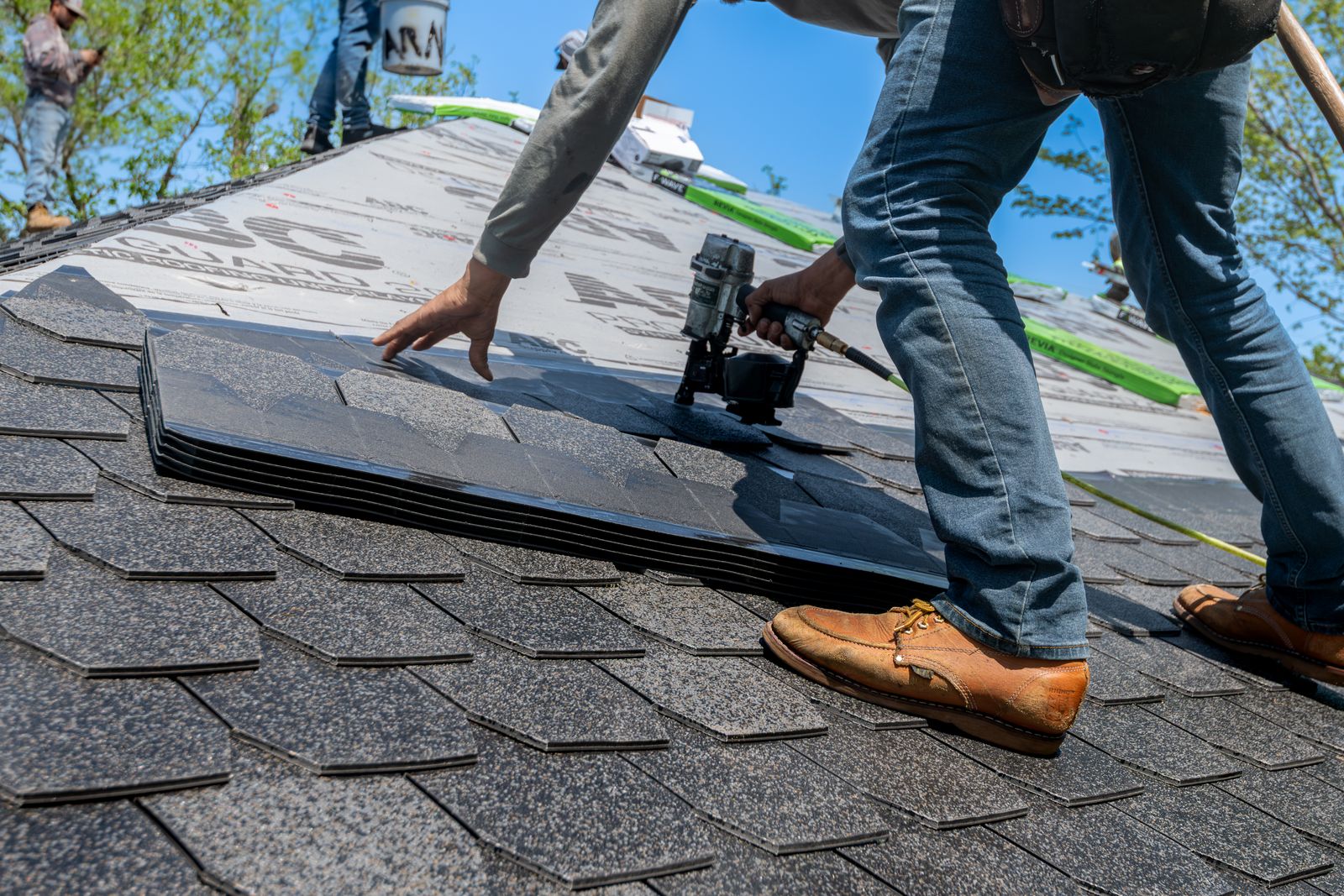
The water barrier under the shingles, the gray sheet you can see in the photo above.
- 1
Roof deck
The plywood or OSB everything is nailed to. Soft spots mean water has been getting through for a while.
When it's worth a call
None of these fix themselves. Most get more expensive the longer they wait.
Stains on a ceiling or wall
Water already made it through every layer. The spot on the ceiling is rarely right under the hole.
Shingles in the yard after a storm
Missing shingles leave the underlayment exposed to sun and rain.
Granules piling up in the gutters
Shingles shed their grit as they wear out, a common sign of an aging roof.
Curling, cracked or lifted edges
Shingles that don't lie flat let wind get under them and water behind them.
Tell us what your roof is doing.
One call is enough to figure out whether it needs a repair, a closer look, or nothing at all.